
fbpx
Select Page

22. Importance

The one serious conviction that a man should have is that nothing is to be taken too seriously.
Nicholas Butler (American philosopher and educator)

This area is closely related to values. The term importance rather than, for example, ‘value formation’, is used because it is more encompassing. Values can be seen as a subset of importance, but not the other way around: everything valuable is also important, but not everything that is important is valuable (e.g. earthquakes are important but not valued). The title also emphasises that this area is not concerned with the formation of moral, political or cultural values but with the process of ascribing the value or importance to an object, person, activity, event or internal process. We will learn here how to reduce and increase importance, but first, let’s consider what is important to us and why.


What is important for me and why?

Knowing what is really important to us is not straightforward. This can be distorted by immediate desires, other people or old habits. Furthermore, we sometimes make the object of our need or desire more important than the need or desire itself, which may lead to getting fixated with that object and prevent us from recognising other options. For example, you are hungry, and you start thinking about a burger. The burger becomes important, rather than satisfying hunger, and you miss a chance to eat something nicer and healthier. This is why examining if what you think is important really is can be powerful. The following questions may help you do that:

  • Choose an object, person, event, activity or principle and consider why it is important for you. For example, if it is football, why is this the case? Is it an old habit? Is it because it was important to your dad when you were growing up? Or is it because football is a refuge from the everyday grind?
  • Which part of what you picked up is really important? (E.g. in the case of football, it may be spending time with your mates, so football itself is, in fact, secondary).

To clarify your priorities, try this exercise:

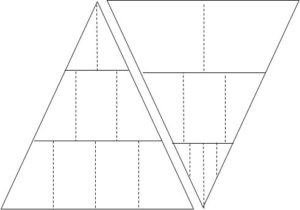
The pyramid of priorities: for the purpose of this exercise you can draw your own ‘pyramids’ (the number of segments in each of the three levels can vary – those below are just an illustration).

  • Place each item that matters to you (e.g. family, friends, health, job, religion, hobbies, etc.) on one level of the left pyramid: the most important one(s) on the top, medium important one(s) in the middle, and the less important one(s) at the bottom.
  • In the upside-down pyramid write on top what takes most of your time, energy and attention, in the middle what takes less, and so on.
  • Do the same things appear in the respective levels of both pyramids? If you find that you spend a lot of time on things that are not very important to you, you may want to make some changes (careful though: for example, your job may not be very important as such, but it may be essentail for support your family).


Regulating importance

Our state of mind depends significantly not only on what is important to us but also to what extent. As it is you who assigns importance to anything, you can actually increase or reduce it. This ability to regulate importance can be quite powerful.

Increasing importance

We cannot know for sure what may become critical, so nothing should be treated as so insignificant that it can be ignored (for example, a little fishbone may suddenly become a matter of life and death). Particularly in a complex system of human interactions, any action may potentially have far-reaching consequences (the so-called ‘butterfly effect’): just a smile can influence somebody to do something that can affect other people and so on. Also, if nothing matters, you end up with boredom, isolation, alienation and a lack of motivation. Such an attitude may be spurred by a desire to leave an impression of being ‘above it all’. This, however, easily turns into indifference and cynicism and becomes a habit from which it is difficult to break out (a sort of psychological anorexia). To put it simply, if you want to find more things interesting or enjoyable, don’t ignore what is around you.

How to do it: there are a few ways of increasing importance if you feel that this is something you need to do:

  • We tend to take what is readily available for granted, which may lead to forgetting how valuable it actually is (e.g. having running water and electricity or having a partner or old friend around). To remedy this, imagine for a moment that something or somebody you usually take for granted suddenly disappears. How would you feel? For example, if both mobile phones and toilets vanish, which one would you miss more?
  • The more you invest in something, the more important it will become. So, invest what you can (it doesn’t matter what – it could be your time, thoughts, emotions, effort, money, etc.).
  • If you don’t care enough about something (e.g. your exams), consider its value, why it matters or could matter one day.

Reducing importance

Excessive attachment, dependency or overreactions may all be the signs of giving too much importance to something, This can also create an imbalance: too much importance is associated, on the one hand, with worrying, possessiveness and even obsession with its target, and on the other, with detachment from and emotional neglect of other things in life (a typical example could be a person who forgets everybody and everything else when they start a new relationship). Let’s see what we can do to gage importance better.

How to do it: this is what you can do if you feel that you are giving too much importance to something:

  • Consider the importance of your desires themselves (e.g. the importance of getting a new pair of shoes can be re-evaluated if you examine how important wanting them is in the first place).
  • Importance is often a projection of self-importance, so reflect for a moment if something is important for you because you want to feel important, and remember that self-importance is insatiable – the more you feed it, the more demanding it gets.
  • Take a larger perspective (you know that one, ‘in the grand scheme of things…’). You can ask yourself, “will this really matter tomorrow or next year?”. If you are more of a visual type, look at the situation from a distance (or from above).
  • It is well known that reminding ourselves of our own mortality can help us put things in perspective and reduce giving them too much importance.
  • Humour can also help against taking things too seriously. Don’t sweat the small stuff, as they say.
  • De-investing (your thoughts, emotions, time, money, etc.) can also produce powerful results in this respect. For example, the less you think about something, the less important it will be.

The Goldilocks Principle

How do we put all these together? As a rule of thumb, it is best to keep importance within a certain range as in the Goldilocks tale: not giving anything either too little or too much importance.


    When we have done what we need to on the inside, the outworking will come about automatically.

    Goethe (18/19c German writer and statesman)

    This area is not about changing your job, wallpaper, country or partner – it is about changing yourself; in other words, your habitual cognitive, emotional and behavioural patterns.

    What do you want to change?

    Being able to make a personal change is essential. So this chapter will be very practical and to get the most out of it, it may be a good idea to start by thinking about something that you would like to change. Choose something small because this increases your chances of success and confidence. Define what you want to achieve in simple, clear and positive terms (for example, rather than aiming to lose weight, aim to be fit or to look good).

    Prerequisites for successful change

    ‘I can’, ‘I want’ and ‘I like’ are three conditions for successful change. If all three are present, you can hardly fail!

    Prerequisites for successful change

    ‘I can’: we are all capable of both failing and succeeding. If you believe that you can’t change, it is true; if you believe that you can, it is also true. To strengthen 'I can', think about successful changes that you have made in the past. If you can’t remember any, just consider that if others can change, you can change too.

    ‘I want’: you need to believe that the change is worth your time and effort. Filling in this table can help you make it clear:

    Old pattern New pattern
    Advantages Disadvantages Advantages Disadvantages


    However, if wanting to change is only in your head, it may not be sufficient – the resolution needs to come from your gut. A half- hearted attempt is unlikely to succeed, so make sure that you really want to make a change. The stronger and deeper the feelings associated with the change are, the more profound the change will be. The following interventions can help in this respect.

    Wanting change: imagine what your life will look like (in a few days, months or years) if you continue in the same direction. Then imagine vividly that you have changed. What will it look like? How will you feel? Which one is better? Nurture a sense that you can live well without the old habit by seeing life after the change in a positive light.

    ‘I like’: We can learn to like and dislike something. Nobody likes their first cigarette or first glass of vodka but some persist and learn to like it. If we can learn to like what is not good for us, we can learn to like what is. We can do so by associating a change with a good experience. For example, rather than forcing yourself to eat healthily, find a way to enjoy it: prepare a nice meal and/or add to it something that you already like (e.g. bacon bits, grated cheese, good company, or nice music – be creative!). You can combine this with growing a dislike for the old habit: associate it with unpleasant feelings. 'But', you may ask, 'what can I like if I just want to give up something (e.g. smoking)?' You can like being in charge and free (from the old habit); the benefits of the new (e.g. smelling good, breathing well); the company of likeminded people; yourself, your body, your mind, your life!

    The stages of change

    It is widely accepted that there are several stages of change(1). Here are some suggestions for each of them:

    Learn about your habit

    • Its causes: to examine the causes or reasons why you have a particular habit, imagine that you no longer do what you usually do – how do you feel? How can you address the underlying feeling that causes your habit?
    • Its triggers: to locate its triggers, observe your habit without any interference. A trigger can be your state of mind, other people or certain events. Consider how they can be neutralised –what else could you do in a trigger situation?

    Prepare

    • Set an achievable, realistic goal. Bear in mind that a small change is better than a big failure.
    • If you have succeeded in making a change in the past, recall what helped you then – the same or similar may help you now.
    • Your old habit may be part of a larger picture (e.g. staying out late may be a part of your social life). In this case, you may need to do something about other parts too (e.g. friends who encourage you to stay out late).
    • Be prepared for the fact that some people around you may not be supportive: think about who may want (perhaps unconsciously) to sabotage the change and what you can do about it. By the same token, consider who you can talk to or rely on if you are in danger of relapsing.
    • Go back to the above table that compares the old pattern and the new one, and consider how you can compensate for the advantages of the former and the disadvantages of the latter.
    • Decide if you will make a change gradually or in one go.
    • Consider the timing (e.g. if you are taking exams next week, it may be better to make your change after that) and set the date.
    • Attempt to make a change only when you feel ready. Are you 100% ready? If you are not, go back to the prerequisites.

    Go for it

    • Announce your intentions and ask others to support you.
    • Stop negotiating with yourself (or you will lose it). Just do it!
    • Dis-identify with what needs to be changed and identify with the new (e.g. if you wish to be more outgoing, stop thinking about yourself as a shy person). You can even mentally identify with an image that symbolises the change (e.g. a rock if you want to be more firm with your choices).

    Persist

    Persistence is essential in this process because old patterns tend to return out of habit. This may be the hardest part (as somebody once said: ‘It's easy to stop smoking, I do it twenty times a day’). However, persevering is worthwhile: in addition to the specific benefits, every successful change also increases your sense of personal power and control. This can help you to persist:

    • Use a tempting situation as a reminder to stick to your goal.
    • Catch yourself when tempted, acknowledge your feelings and thoughts, and then remember the consequences of backsliding (e.g. how you will feel tomorrow).
    • It is much easier to relapse when excited, so be especially vigilant if you notice that you are getting keyed up.
    • Use your imagination to put yourself off a temptation (e.g. imagine slime dripping on and covering a cake you fancy).
    • Enjoy the new as well as its benefits, and appreciate your achievement (no false modesty, making a change is a big deal!)

    If you relapse

    If you experience a relapse, accept it as a temporary setback – you are defeated only if you give up! Be aware of what is going on though, as this may help you in the future. Establish why it has happened and develop a strategy for similar situations in the future. For example, if you had a cigarette because you were annoyed, think about what you will do instead the next time you get annoyed. A frequent reason for relapse is forgetting what you have decided. So, remember to remember!


    (1) Prochaska, J., Norcross, J. & Diclemente, C. (1994) Changing for Good. New York: Collins.

    Copyright

    PWBC (Personal Well Being Centre)
    United Kingdom

    Copyright

    PWBC (Personal Well Being Centre)
    United Kingdom